Gold, Frankincense, Myrrh: Which Do You Need to Offer?
The Season after Epiphany
The Season after Epiphany continues the mysteries of the Epiphany, and we are still reflecting on the three mysteries of the Epiphany: the coming of the Magi, the Baptism of our Lord, and the Wedding at Cana.
During the eight days of Epiphany, the visit of the Magi predominated in the Church’s Liturgy. In the East, the Epiphany (or “Theophany”) is especially the feast of the Baptism of the Lord. In the West, the Baptism of the Lord is certainly present, but as an undercurrent, and it rises to the surface especially on 13 January, the eighth day of Epiphany.
Last Sunday, the second Sunday after Epiphany, lifted our minds to the mystery of the Wedding at Cana. Over the next few Sundays, we will continue to marvel at the Lord’s manifestations, for Epiphany means manifestation.
Gold, Frankincense, and Myrrh
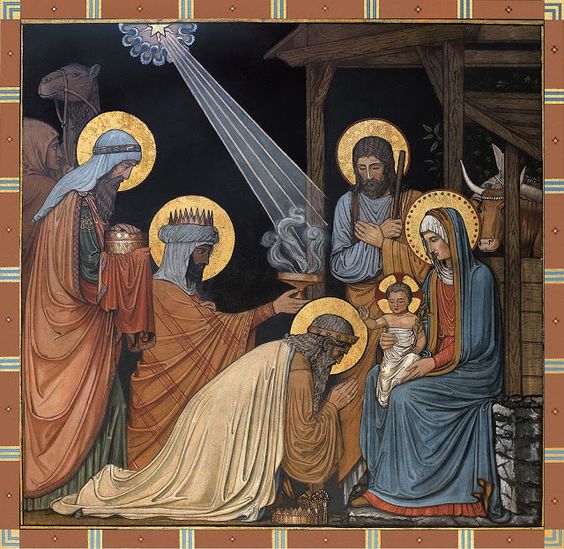
We do well, in contemplating the various manifestations of the Lord that the liturgy lingers, on in these weeks to continue to recall that first manifestation to the Gentiles, the manifestation to the Magi. For the Benedictines of Perpetual Adoration, this manifestation has a special meaning, which Mother Mectilde commentated upon in her Epiphany Conference.
The visit of the Magi offers a striking moment of adoration of the God Who is hidden from the world, the God Who rests upon the bosom of the Blessed Virgin Mary, Mary to Whom she shows the way.
The adoration of the Magi is demonstrated in a tangible way. They offer gold, frankincense, and myrrh.
Many meanings have been given to the three gifts the Magi brought our Lord, and doubtless more than one of them were directly intended by the Holy Spirit when He wrote His story in deeds and in words. Perhaps the most common meaning — one given by the Church during the Matins lessons — is that gold recognizes that Christ is King, frankincense that He is God, and myrrh that He took on mortal flesh and will die for us men and for our salvation.
One can, bearing this in mind, consider the gifts from the perspective of the invitation they extend to us.
When the Lord manifests Himself to us through faith, how are we to give Him our gold, frankincense, and myrrh?
If gold signifies that He is King, we give Him gold when we acknowledge His Kingship over us by submitting ourselves, all we have, and all we are to His Kingship, as it is written: Thine, O Lord, is the greatness and the power, and the glory, and the victory, and the majesty: for all that is in heaven, and in earth, is Thine: Thine is the kingdom, O Lord, and Thou art exalted as head over all (1 Para 29:11). We give Jesus our gold by our obedience.
We give Him incense when we adore Him, worship Him, glorify Him, proclaim Him as King, as it is written:
I saw the Lord sitting upon a throne high and elevated: and His train filled the temple. Upon it stood the seraphim: the one had six wings, and the other had six wings: with two they covered his face, and with two they covered his feet, and with two they flew. And they cried one to another, and said: Holy, holy, holy, the Lord God of hosts, all the earth is full of His glory. And the lintels of the doors were moved at the voice of him that cried, and the house was filled with smoke (Is 6:1-4).
We give Him myrrh when we join Him on the Cross and offer Him our bodies as living sacrifice, our spiritual worship, as the Bride says of Him in the Canticle of Canticles, referring to her heart’s union with the Passion: A bundle of myrrh is my beloved to me, he shall abide between my breasts (Cant 1:13).
All the Offerings are Due Him
God requires all three of these offerings from each of us. It is not enough to recognise Him as God with our incense if we do not obey Him with our gold, and even if we keep His commandments, but flee from union with His sufferings, how can we hope to share in His resurrection? For it is written, if indeed we share in His sufferings in order that we may also share in His glory. I consider that our present sufferings are not worth comparing with the glory that will be revealed in us (Rom 8:17f); and, If we suffer, we shall also reign with Him. (2 Tim 2:12)
By our life in our bodies, then, we must offer God the gold of our submission to His Holy Will, the myrrh of our union with His sufferings, and by this means offer our bodies as incense to the God-man.
An Objective Order to the Offering
All three must be offered to Him by every Christian, and yet there is an ordering to the three. All three are united into one through the worship of God in charity. The height of worship is to become one sacramental victim with Christ, and in this union with the Christus Passus, with Christ who has suffered, we offer Him, in union with Him and through Him, the incense of our worship, all our sufferings, and the obedience of faith (for the law is written in the heart of those that love, or, as St John of the Cross put it, Here [on the height of the mountain] there is no longer any way, because for the just man there is no law, he is a law unto himself).
Faith, Hope, and Charity
In the Council of Trent’s Decree on Justification (Chapter 6), the Holy and Ecumenical Council decreed that justification begins by faith (for one must first believe that God exists, and that He rewards and punishes), which inspires fear of divine justice and then proceeds to hope in the mercy of God, and this is raised to charity, because sinners discover in the mercy of God that God loves them and wishes to have mercy on them. But charity changes hope and faith, making them alive, transforming them so that faith and hope become a living faith and hope, animated by the love of God, the fount of all justice, such that, at long last, perfect love casts our fear.
In the three gifts of the Magi — as we have been understanding them as obedience, suffering, and worship — we see a similar order. At first we offer Jesus the gold of our obedience — of letting Him rule us — because we recognise His Kingship and that He has the power to rule, and to reward and punish according to His judgments. This gives birth to a certain fear within us of God’s just punishments for breaking His commandments, but also a certain hope for the promised rewards. We then discover that this requires the cross, death to self and suffering. We give Him the myrrh of our suffering, not at first without fear, but also with hope of reward. Yet this hope does not remain trapped within our own self-interest, for we are moved forward towards love of God, first because the gifts He lavishes upon us when we offer Him our gold and myrrh render lovable the Giftgiver, but then because we recognize the surprassing Goodness, worthiness, and intrinsic lovability of the Giftgiver and begin to love Him for Himself.
Then we are ready to fully give Him the incense of our self-immolation, fulfilling the words we heard from Saint Paul on the first Sunday after Epiphany: Brethren: I Beseech you, by the mercy of God, that you present your bodies a living sacrifice, holy, pleasing unto God, your reasonable service (Rom 12:1). We make of ourselves a sacrificial offering to Him, an odour of sweetness, an incense of worship. And this in turn transforms our obedience and our suffering, for our obedience becomes all love, and our suffering a union of love with the Christ the Victim. Our gold becomes, in a way, incense. Our myrrh becomes incense. We offer all three to the Lord, and yet all we offer is worship and adoration in utmost love.
The Purgative, Illuminative, and Unitive Ways
There is a parallel between these three gifts and the three traditional stages of the interior life. It is easy to see the connection between the gold of obedience and the purgative way, for, on the purgative way, the soul is purified from sins and from disordered attachments creatures. The myrrh of union with the suffering Christ corresponds well to the illuminative way, for it is in the illuminative way that the Lord works in the soul, as if in a dark night, purifying the soul by infusing His own presence into the soul, uniting the soul to Himself mystically. Finally, the frankincense of divine worship corresponds to the unitive way, which takes up the obedience by which the soul purified herself, and the union with the Cross by which Christ purified her and identified her with Himself, and it transforms these through the transforming union whereby the soul becomes una secum hostia, one sacrificial victim with Him to the worship and adoration of God.
The Three Degrees of Surrender
The three gifts also correspond to the three degrees of surrender. We have written about abandonment, the highest degree of surrender (for instance here, here, and here, and also a text from Mother Mectilde about it).
The three stages of surrender are submission, adhesion, and abandonment. The first degree, submission, is epitomised by the phrase “I adore and I submit” used so frequently in the book Abandonment to Divine Providence. It corresponds to the gold of obedience, because in this stage the Will of God often seems contrary to one’s own and even harsh. To obey God’s commands requires effort and sacrifice and pain. Though it is done not without fear, with effort and suffering, submission nonetheless stems from faith in the God who rewards the good, as well as punishes the wicked, and it is an active form of hope and love.
But hope is expanded greatly in the second stage, adhesion, which is epitomised by what were nearly the last words of our Venerable Mother Mectilde de Bar, “I adore and I adhere.” To adhere is to cling fast to something, but that something is still outside of oneself and it still requires an effort. Adhesion corresponds to the sacrificial gift of myrrh because suffering is still experienced as difficult and one would still rather the hard and rugged ways not be part of God’s plan, yet one makes the offering nonetheless because of hope. Fear has been superseded and greatly diminished by hope. One adheres to the difficult and painful because one is confident that God will reward, that His plan will more than compensate for the difficulties, that it is, truly, for the best. And the experience of hope that does not disappoint gives birth to a love of Goodness of the Divine Gift-giver that leads one past the mere myrrh of suffering.
At this point one enters into abandonment. The phrase that best epitomises abandonment is simply the first part of the other two phrases: “I adore.” Abandonment is an immersion into the into “the flowing current” of God’s grace, in the words of Don Dolindo. It is letting oneself “be carried along” and “rest in” Him. It is a belief in “His Goodness.” This is all summarised in Don Dolindo’s famous saying: “Jesus, I abandon myself in You, take care of everything”, and, again, there is also the saying of the Prophet Job, so dear to St Therese, “Even if He kill me, yet will I trust in Him.” It corresponds to the frankincense of adoration, for it is a total entrustment of one’s entire being such that one lives towards Jesus in a similar manner to how St John says that the Word was always towards the Father (John 1:1). With St Thomas Aquinas in the Adoro Te, this soul cries Tibi se cor meum totum subjicit, mine heart submits itself to Thee totally — no longer with struggle and with contrary wish, but with the latitude of love, according to the words of Psalm 118, Viam mandatorum tuorum cucurri cum dilatasti cor meum. “I have run in the way of Thy commandments whilst Thou hast enlarged mine heart.”
The Offering God Wants Right Now
We must give God all three at all times: gold, myrrh, and frankincense. Yet, as we progress through our lives, there will be time when God asks of us gold especially, times when He asks of us myrrh especially, times when He asks of us the pure incense of our loving immolation in adoration.
We must sometimes ask ourselves: What is God asking of me now? Is there something in particular I am denying Him, or failing to surrender, or is there a particular gift He seems to long for from me especially right now? Sometimes we will discover that we are wishing to live according to our own will and designs, and are not eager to give Him the gold of our obedience. Sometimes we discover that we are not willing to take up our cross and follow Him, and so are denying Him the myrrh of our union with His Passion. Sometimes we discover that we are eager for activity and gift-giving, but that in this we are striving to escape the total gift of ourself to Him, and what He is asking is the greater loving contemplation of adoration.
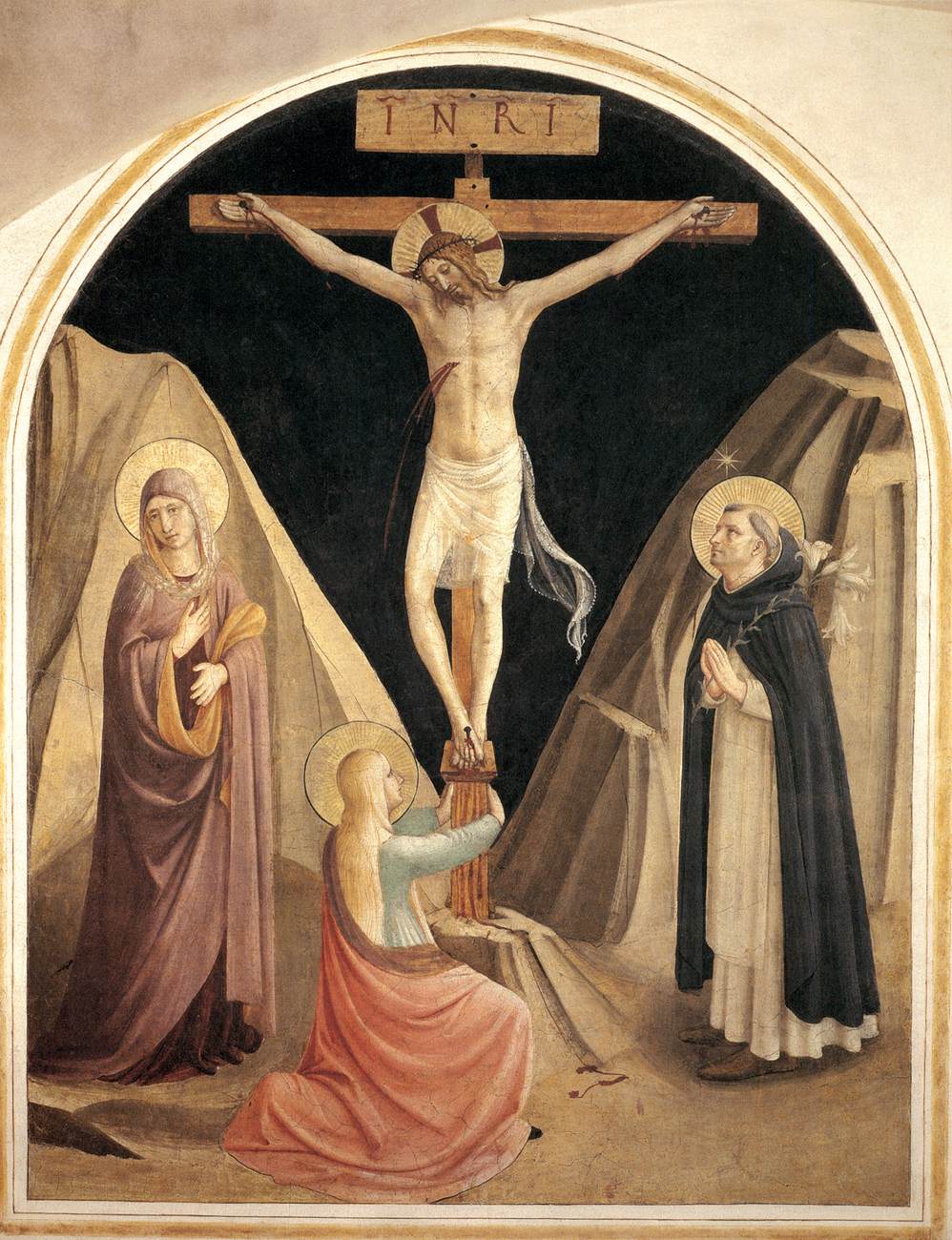 Other times we do not discover that we are lacking something, but we discover a thirst in Him for a particular gift. He cried from the Cross, “I thirst!”, and sometimes we are given to understand how to sate this thirst. Perhaps it is to sate His thirst to bring souls to Him through carrying out His Will in a loving obedience. Perhaps it is to do the same through our union with His suffering. Perhaps He is thirsty for our pure love, and He says: “I thirst for thee more than for what thou givest Me; for I love thee more than the treasures aquired by thy gifts.”
The Offering of This is Your Special Grace, Attraction, and Vocation
In the secret caverns of the depths of the riches of the wisdom and the knowledge of God (cf Rom 11:33), where God dwells and works deep within the soul, where the waters rush and the voice of the waterfalls are heart (cf Ps 41(42):7), where the river of God brings refreshment, making bitter sweet (cf Ez 47), God has planted hidden treasures, brightshining gems that, hidden now, shall be revealed in the last day. These are the attributes of God, things such as His Wisdom, His Power, His Mercy; attributes that are all one in Him and identical with Him, but which are split up amongst the saints so that together the glory of God may shine radiant in the Church.
On the day when all that is hidden will be revealed (cf Lk 12:2), we shall see glittering from the depths of all the holy souls the gems of all the gold, frankincense, and myrrh that each elect soul offered in her life. Yet not all three will shine as brightly in every soul. Some souls will be marked more by the beautiful gold that they offered. Some will be bedecked more by the fragrance of their myrrh. Some will seem to rise even to the throne of God by the cloud of their incense. For God wishes to draw us by different paths, and every soul is truly different from every other soul, drawn individually to proclaim uniquely the glory of God.
Each Has Gifts Differing According to the Grace Given
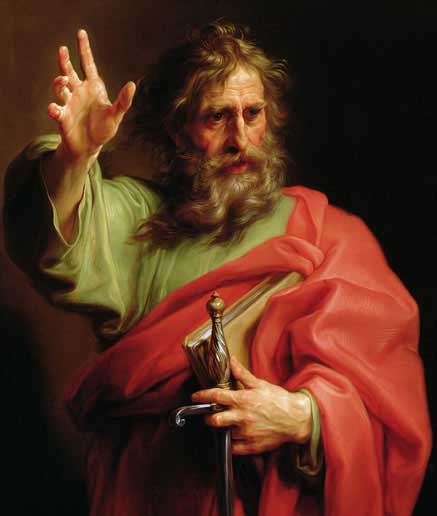 The Epistle for this week is from Romans 12. As he does with similar words in I Corinthians 12, Saint Paul wants to remind us that we differ from one another as members of a body differ, for we are the Body of Christ. Yet we are also one, for the Holy Spirit gives to each differently, but in a way that is profitable for the whole.
The grace that differs among the various members of the Body includes the special attraction to offer a specific gift to God. There are souls marked especially by obedience — think of Saint Gabriel of Our Lady of Sorrows, for instance, or Saint Margaret Mary Alacoque to whom the Lord said: “Satan is enraged and will seek to deceive you. Therefore, do nothing without the approval of those who guide you; being thus under the authority of obedience, his efforts against you will be in vain, for he has no power over the obedient.”
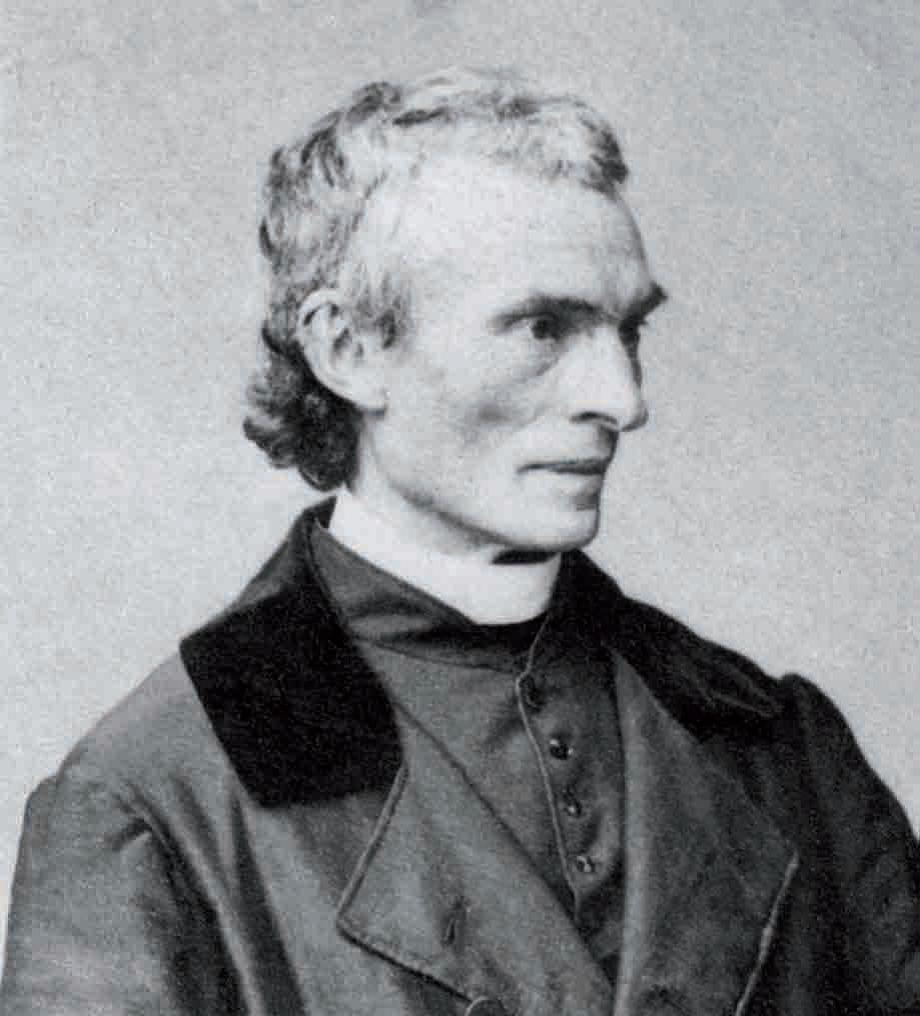
Others are especially marked by adoration. Saint Peter Julian Eymard comes to mind. He insisted the greatest veneration possible be shown to the Most Blessed Sacrament and would refer to the founding of a new community as “raising a new throne to the Lord.”
Our own Mother Mectilde may easily be counted amongst those whose charism is to offer incense to the Lord, and yet an argument could easily be made that the incense she offered was myrrh, for her whole bent was to become worthy of being counted a victim along with the Christus Passus. Saint Thérèse of the Child Jesus, Saint Padre Pio, Saint Gemma Galgani, and a myriad of other saints can be counted amongst those who especially were called to offer myrrh, though, of course, all the saints offered all three.
By the Wine Our Lady Obtains
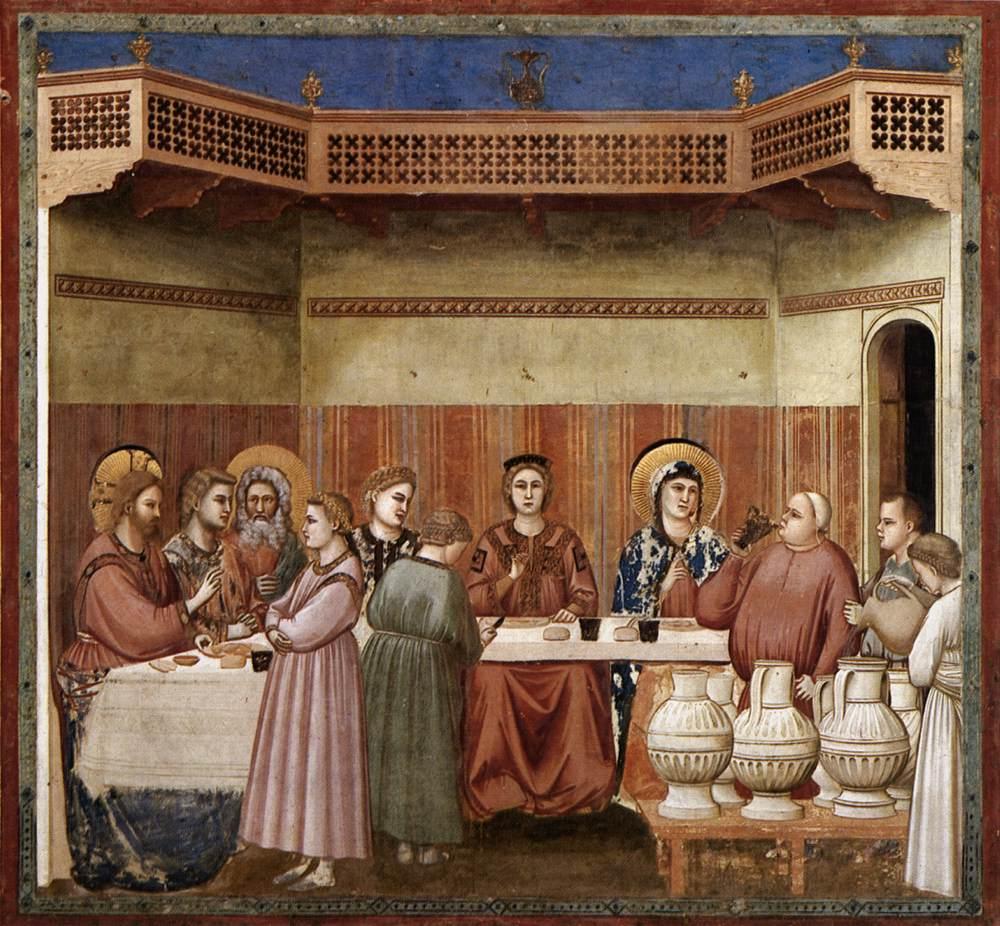 Even in our offering, how important it is to recall that without grace we can do nothing. Grace is the star that beckons us; our journey to Him is through grace; the offering we make is through grace. And when grace leads us to Him, we will always find Him with Mary, as now, indeed, he is forever enthroned with her, the Queen Mother by His side.
As we hear the Gospel this week, Mary is aware of our needs. To make our offering well, we need the wine of the wedding feast, the wine that she obtains from the Lord. It is the wine of the joy of the Holy Spirit that renders our offering of our obedience, our adoration, and our immolation acceptable to God and pleasant to us and our fellow men, for, as this week’s Epistle exhorts to cheerfulness, “God loveth a cheerful giver” (2 Cor 9:7).