The Disappearing Sixth Mode
The Major Scrutinies
Today is Feria Quarta Majoris Scrutinii, the Wednesday of the Great Scrutiny. The Stational Church for today is St Paul Outside the Walls, and in ancient times the Pope would gather there today with the catechumens to pray over, exorcise, and examine them, and to close the list of those who would be baptised.
The Sixth Mode, a Shrinking Violet?
The sixth mode is the mode of love and tenderness, of faithfulness and devotion, of fatherhood and sonship, of peace and charity. One need only listen to the the sixth mode chants Ave Verum Corpus or especially Ubi Caritas to understand the loving tenderness of the sixth mode. The sixth mode has an especial association with Easter.
So it is not surprising to discover that the sixth mode is rare in penitential season of Lent. It is far and away, in fact, the least commonly used mode for the music of Lent. Today’s Communion antiphon is one of the only specimens of a Lenten sixth mode chant.
Since the First Sunday of Lent, the sixth mode has completely dropped out of the Divine Office, save for a few antiphons for ferial psalms and canticles that are used all year round. Even the familiar sixth mode responsory tone, used virtually every day, is replaced in Lent by a more melancholy fourth mode responsory tone. The sixth mode will not return to the Divine Office until the Paschal Vigil in the Antiphon for the shortened Vespers at the end of the Mass.
In the Lenten Masses, the absence of the sixth mode is not so total, but it is nearly so. It appears twice during Lent — both times in Communion Antiphons — and once during Passion Week for an Offertory. Compare this to the Paschal Octave wherein, beginning on Easter Sunday, the sixth mode returns several times in one week as the Communion Antiphon. Finally, on Dominica in Albis, it returns in full force as the mode of the famous Introit Quasi modo geniti infantes. The last time we would have heard the sixth mode for an Introit prior to Low Sunday was Quinquagesima Sunday, the great Sunday of God’s merciful love when we read 1 Corinthians 13 and meditated upon Abraham.
Remembrance of Baptism
Today’s sixth mode Communion Antiphon is Lutum fecit:
Lutum fecit ex sputo Dominus, et linivit oculos meos: et abii, et lavi, et vidi, et credidi Deo.
The Lord made clay of spittle, and anointed my eyes: and I went, and I washed, and I saw, and I have believed in God.
Why, if the sixth mode is used so uncommonly, do we find it used today for this antiphon?
That it is used for a Communion Antiphon should not surprise us: the sixth mode is the modus devotus, and nowhere does our Lord show greater pietas to us than in Holy Communion. As already noted, the Communio of Easter Sunday will also be in the sixth mode. Yet since today is a feria in Lent, we should look for a deeper reason than simply because it the time of Communion.
That deeper reason will be found in the context of today’s Mass. At the Introit we had heard the call to Baptism given to the Catechumens:
When I shall be sanctified in you, I will gather you from every land: and I will pour upon you clean water, and you shall be cleansed from all your filthiness: and I will give you a new spirit.
This text of Scripture was again repeated in the first Lesson, with a Gradual following it that included the imperative illuminamini! “Be illuminated!” (Illumination is another name for Baptism). After this, we heard another call to Baptism, this time from Isaias.
Wash yourselves clean! Put away your misdeeds from before My eyes; cease doing evil; learn to do good.
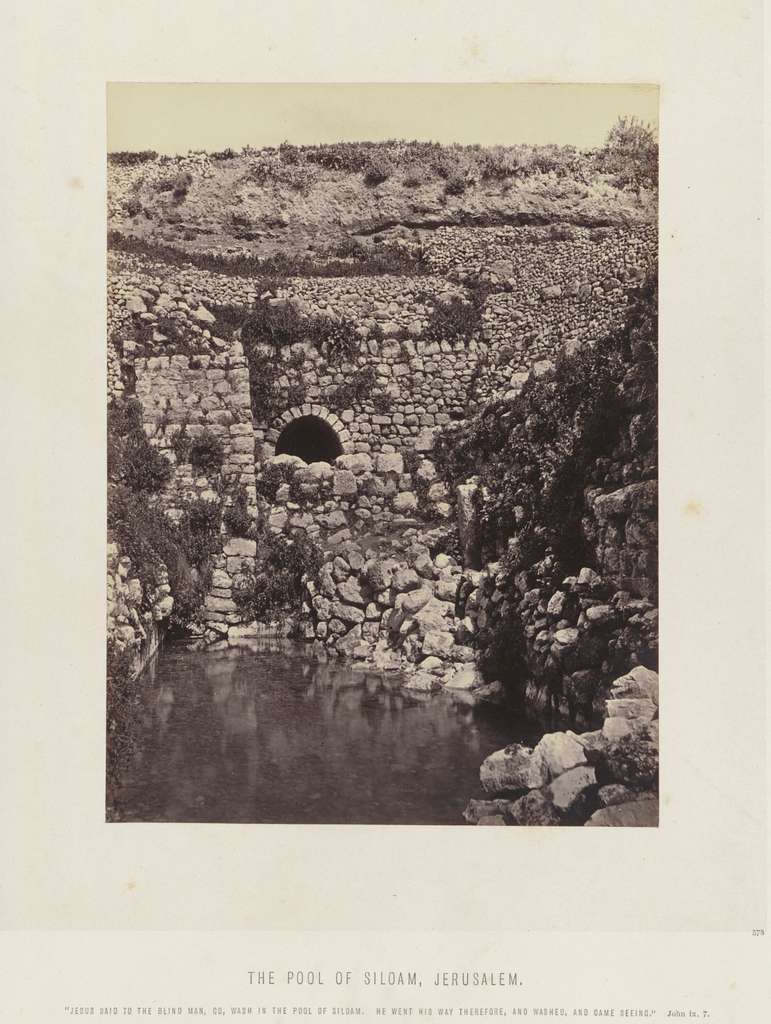
Then followed today’s Gospel: the story of the opening of the blind man’s eyes by washing in the waters of Siloe. In ancient times, it is quite possible that this would have been the first time the catechumens had heard this Gospel. It would have been explained to them in reference to the Baptism that they were about to receive. Still today, in the appointed Matins reading for this morning, Saint Augustine interprets this in reference to catechumens: “When [the blind man] was anointed,” Saint Augustine says, “he was perchance made a figure of a catechumen.”
The Gospel marked the end of the Mass of the Catechumens. All those who had just undergone the Scrutinies would leave. As some forms of the Divine Liturgy of Saint John Chrysostom still say at this point: “Those who are catechumens, depart; catechumens depart; all those who are catechumens, depart. Let none of the catechumens remain.”
Who would remain? The faithful. They alone who had been initiated, who had received the washing and the anointing and had already been illuminated, would be in the Church for the Sacrifice. As each approached to receive the Sacred Mysteries, what thoughts must have been going through through minds? What sentiments through their hearts? Surely, seeing the Elect who had just been through their Scrutinies, they must have remembered when they themselves had been through these very rites, and the Vigil of Easter when they first had approached to receive the Lord.
In this context, what other melody could come to their lips than notes of devotion, of piety, of love? So it is that they break into the sixth mode as they sing: … I went, and I washed, and I saw, and I have believed…