
The Antiphons of Saint Joseph
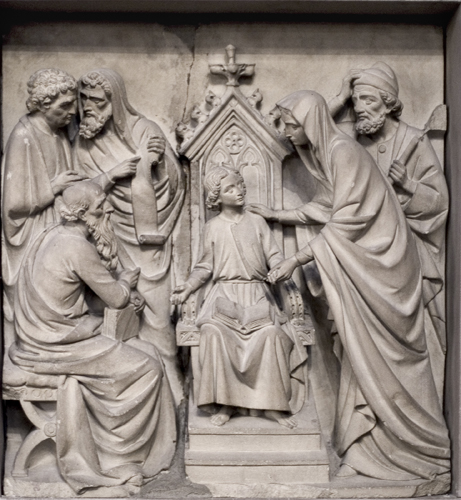
The Antiphons for Saint Joseph are some of the most delightful Antiphons of the Year. The series of five psalm Antiphons recounts one of the few narratives of Saint Joseph we have in the Gospels: the loss and finding of the Child Jesus in the Temple. Each Antiphon is masterfully composed with an appropriate mode and paired with a corresponding Psalm from the usual Psalms of feast days.
Antiphon 1.
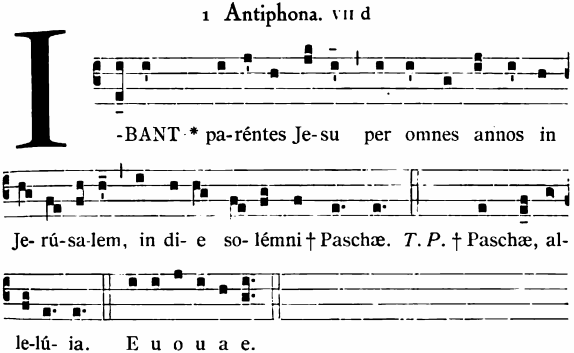
The parents of Jesus * went to Jerusalem every year, at the feast of the Passover.
The narrative begins with the Holy Family making their ascent to Jerusalem for the Pasch. In the temple, man worships God on earth the way the angels do in heaven.
The mode is mode 7, the “angelic mode”. The ascending incipit represents their ascent to the holy city, and also is reminiscent of the Advent antiphon Urbs fortitudinis nostrae Sion.
The Psalm for this Antiphon describes the Lord’s presence in the temple: Psalm 92, “The Lord hath reigned, He is clothed with beauty.”
Antiphon 2.
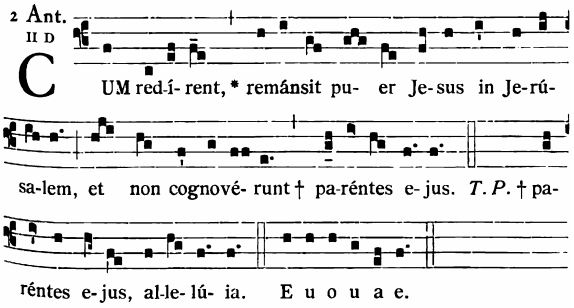
When they returned, * the Child Jesus tarried behind in Jerusalem, and His parents knew not of it.
Having completed their divine service, Mary and Joseph return on the journey to their home. They do not yet know that Jesus is not with them.
The mode is 2: a mixed mood. Sometimes happy, sometimes sad / suspenseful. They don’t know yet that He is missing. What will happen next?
The Psalm describes the Parents of Jesus happily completing their mission without yet knowing where Jesus is: Psalm 99, “Sing joyfully to God, all the earth, serve ye the Lord with gladness.”
Antiphon 3.
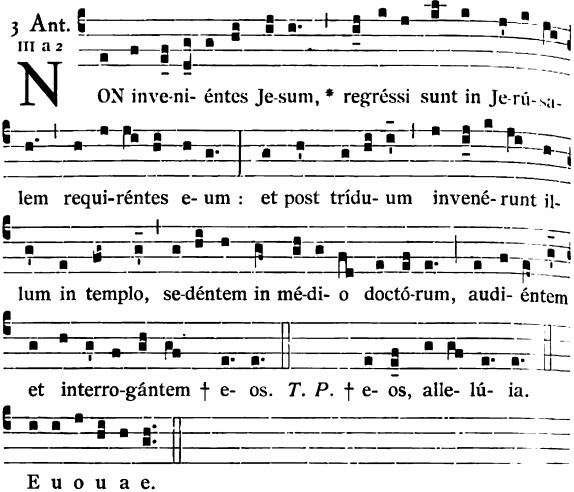
When they found not Jesus, * they turned back again to Jerusalem, seeking Him; and after three days they found Him in the Temple, sitting in the midst of the Doctors, both hearing them and asking them questions.
They now realise they have lost their Son! And they look for Him sorrowing
The mode is Mode 3: a sad longing. A frightening suspense! Where is Jesus? Why can’t we find Him?
The Psalm describes their search for Jesus and longing for Him to return: Psalm 62, “O God, my God, to Thee do I watch at break of day. For Thee my soul hath thirsted; for Thee my flesh, O how many ways!”
Antiphon 4.
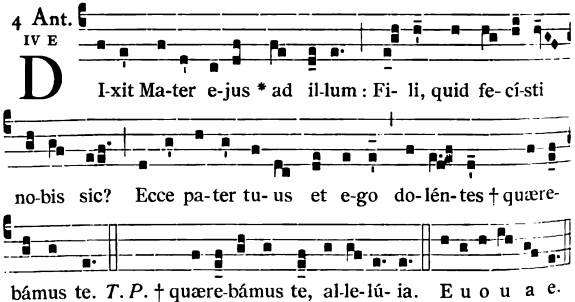
His mother said unto Him: * Son, why hast Thou thus dealt with us? Behold, Thy father and I have sought Thee sorrowing.
Having found their Son again, Mary and Joseph are in wonder and awe at what they find: Jesus among the doctors, about His Father’s works.
Mode 4: contemplative. “Mary pondered all these things in her heart.”
The Canticle of this Antiphon is Benedicite omnia opera Domino: the internal dialogue of Mary’s Heart as she tries to understand and bless God in all His designs.
There also seems to be a play on words. The Canticle sings of the opera Domini, “the works of the Lord”, as Jesus says quia in his quae Patris mei sunt oportet me esse: “that I must be about My Father’s business.”
Antiphon 5.
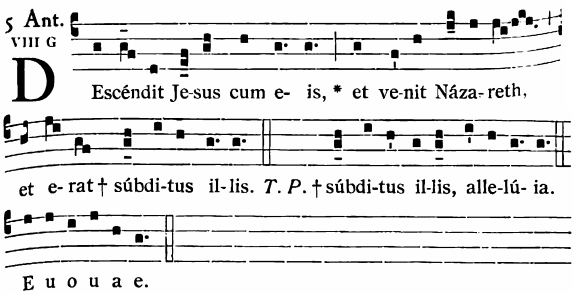
Jesus went down with them, * and came to Nazareth, and was subject unto them.
At the conclusion of this episode, all is resolved and Jesus returns home with His parents.
The mode then is Mode 8, the modus perfectus, the mode of completion and contentment. All is resolved and they rejoice in being reunited.
Their reunion is expressed in the Laudate Psalms, 148-150: Laudate Dominum de caelis.
Notice, however, the motif over the last syllable of the word Nazareth (do-ti-do-re-ti).
This is the Per signum crucis motif from the feast of the Holy Cross (which we also wrote about regarding the Alleluia Antiphon of Sundays in Paschaltide). Jesus’ submission to his parents is already the beginning of the journey to Calvary. As He carries His cross in the quotidian routine of serving His family in Nazareth, He prepares to carry His cross in Jerusalem (which brings us back to the first Antiphon).