
Super Missus Est
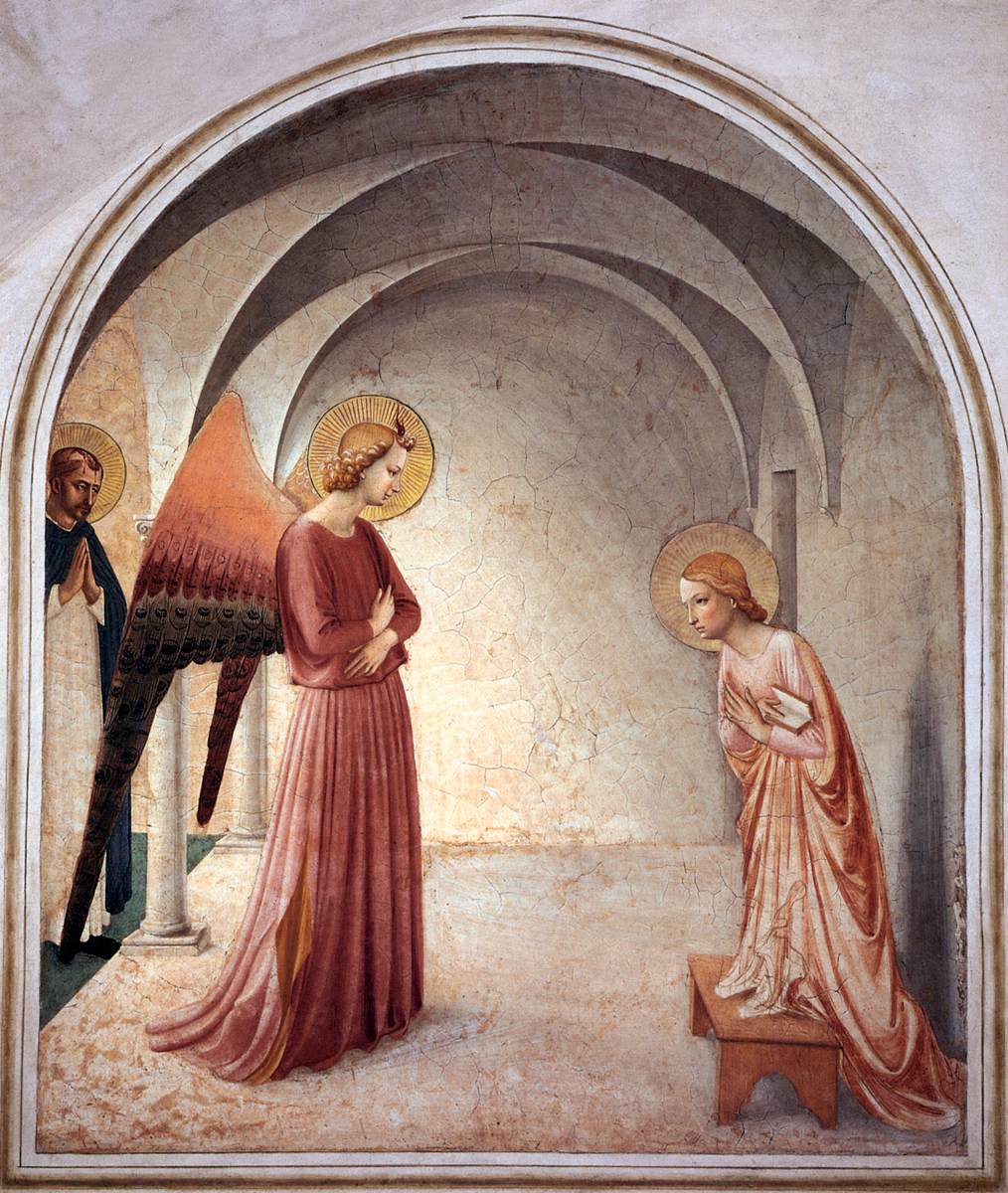
Homily on the Gospel Missus est
Ember Wednesday of Advent
17 December 2025
Note: This is the traditional homily that is delivered each year to mark the Ember Wednesday before Christmas.
Rorate Caeli desuper et nubes pluant Justum,
Aperiatur terra et germinet Salvatorem.
Today’s Mass—the Advent Mass par excellence—begins with a plea for the Just One to be rained down from Heaven. Justice is perhaps the attribute of God which the Law and the Prophets most consistently emphasise, and rightly so. For Justice, the right relation between God and man, and between men in society, is the foundation of peace; it is the reflection on earth of God’s own wisdom and love, of the order that prevails in His heavenly Kingdom.
And so, in a world full of injustice, where pride and concupiscence and selfishness in all its forms dominates, the Prophet implores the coming of the Just One—the One from above, rained down from the clouds—for he knows that only God can bring us justice.
The first Lesson of the Mass, which is the first of Isaias’ Messianic Prophecies, tells of this justice coming to the world as the Law goes forth from Sion and the Word of the Lord from Jerusalem. As the nations come together to Sion, it is so that the Lord’s justice can prevail: ‘He will judge between the nations, and will rebuke many peoples.’ Chastened by His rebuke of their injustice, they will change their weapons of war into implements of peaceful growth—swords into ploughshares, spears into pruning hooks. So may it be, we will pray in the Gradual: may the princes lift up their gates and let the King of glory, the bringer of God’s justice, enter the world.
But with this call for justice comes also a trembling question: ‘Who shall ascend the Lord’s mountain, or who shall stand in His holy place?’ Only ‘the man innocent of hands and clean of heart.’ Who of us, then, shall abide the coming of the Just One? Even as we pray for justice to come, we know that we cannot endure His judgment, His rebuke. We can only pray in the words of the second Collect that we, who are brought low by our sins, may be raised up by His consolations, as we put our trust in His pietas.
That consolation is offered in the Epistle, Isaias 7, the next great Messianic prophecy. Besieged by Judah’s enemies, Achaz is told to ask for a sign. He refuses: He does not want to put his trust in the Lord, because he is looking for human solutions. But the sign is given anyway: this time not of a dramatic divine intervention from on high, but of a virgin of our race bringing forth a son, whose Name will proclaim that God is with us. The Just One, then, Whose coming should be so terrible, wants at the same time to draw near.
And so we dare to make another petition along with the cry for the Just One from above: ‘Let the earth be opened, and bud forth the Saviour.’ The world needs justice, but if we are to endure God’s justice we need a Saviour, and a Saviour sprung from the earth, Flesh of our flesh. ‘Near is the Lord to all who call upon Him in truth’, we will sing in the second Gradual, as we call on all flesh to bless His holy Name—the Name Emmanuel, and the Name of Saviour which is about to be announced to the world.
For in the Gospel these two petitions are both fulfilled. The heavens will rain down the Just One, as the Holy Ghost overshadows the Virgin and allows her to bring forth the One Who will be great, Who will have the throne of David, Who will reign forever, Who will be the Holy One, the Son of God—the One Who will bring God’s kingdom of justice to the world.
Yet in the same moment as the Heavens rain down the Just One, the earth will bud forth the Saviour. For He will be one of our race, conceived in her womb and born as a child, and His Name will be JESUS, the Name that proclaims salvation, that, as the Angel will tell Saint Joseph, He will save His people from their sins. He will be the sign that God is with us, desiring not simply to impose His judgment and His justice from above, but to save us and transform us from within, in the very human nature that He has taken to Himself. So we will sing in the Offertory both of justice and of salvation: ‘Be strengthened, and fear no longer: for behold our God will repay judgment; He Himself shall come and shall save us.’
It can seem impossible: the injustice of the world seems too great for God to have any effect, and the load of our own sins can seem too great for us to be made new. So we may want to say with Achaz that we will not even ask for a sign. Is it that we do not dare to ask for what seems impossible? Or are we afraid to ask, afraid with Achaz that God’s response would mean abandoning our own projects and human securities, and accepting the Lord’s rebuke in order to make us new and bring us His justice?
But the spirit of Achaz—the spirit of distrust that entered the world in the Garden—is answered by the Angel’s word: ‘No word shall be impossible before God.’ All that is needed is that the human heart be open to let Him rain down His justice and spring up from the earth. He finds such a heart in the Virgin—a heart prepared and sustained by grace, yet a free human heart all the same. He asks to come to our hearts today, and every day as, upon the Altar, the Just One drops down by the power of the Holy Ghost and the earth opens to bring Him forth from the humble elements of bread and wine. He comes to judge, to rebuke and convict, but at the same time to save. All that is required is a heart that will dare to hope that nothing shall be impossible with God, and to surrender itself to His all-powerful and all-merciful Word.